
Louis Martin Custom Knives
Handmade Chef Knives
A chef knife is the primary cutting tool in any kitchen — an 8–10 inch blade designed for chopping, slicing, mincing, and dicing. Louis Martin chef knives are hand-forged in Damascus and high-carbon steel with balanced, ergonomic handles for professional and home kitchen use.
Quick Answer
A chef knife is the primary cutting tool in any kitchen — an 8–10 inch blade designed for chopping, slicing, mincing, and dicing. Louis Martin chef knives are hand-forged in Damascus and high-carbon steel with balanced, ergonomic handles for professional and home kitchen use.
A great chef knife transforms kitchen work — less effort, more control, cleaner cuts. Louis Martin's handmade chef knives bring three generations of blade-making expertise to the kitchen, producing tools that professional chefs and passionate home cooks trust for decades of daily use.
Characteristics & Construction
Blade Geometry
Our chef knives feature a German-style curved belly profile optimized for the rock-chop technique, available in 8-inch and 10-inch lengths. Blade thickness at the spine is 3–4mm, tapering to a .5mm edge bevel.
Steel Options
Kitchen blades in Damascus high-carbon (stunning appearance, exceptional edge), 440C stainless (corrosion-resistant workhorse), and D2 tool steel (semi-stainless, max edge retention). Damascus kitchen knives require hand-washing and prompt drying.
Handle Design
Full-tang construction — the blade steel runs the full length of the handle for maximum strength and balance. Handles in rosewood, walnut, pakkawood, and stabilized exotic woods are hand-shaped for a natural grip.
Balance Point
Each Louis Martin chef knife is balanced to center at the bolster — the junction of blade and handle. This balance point reduces wrist fatigue during extended prep work.
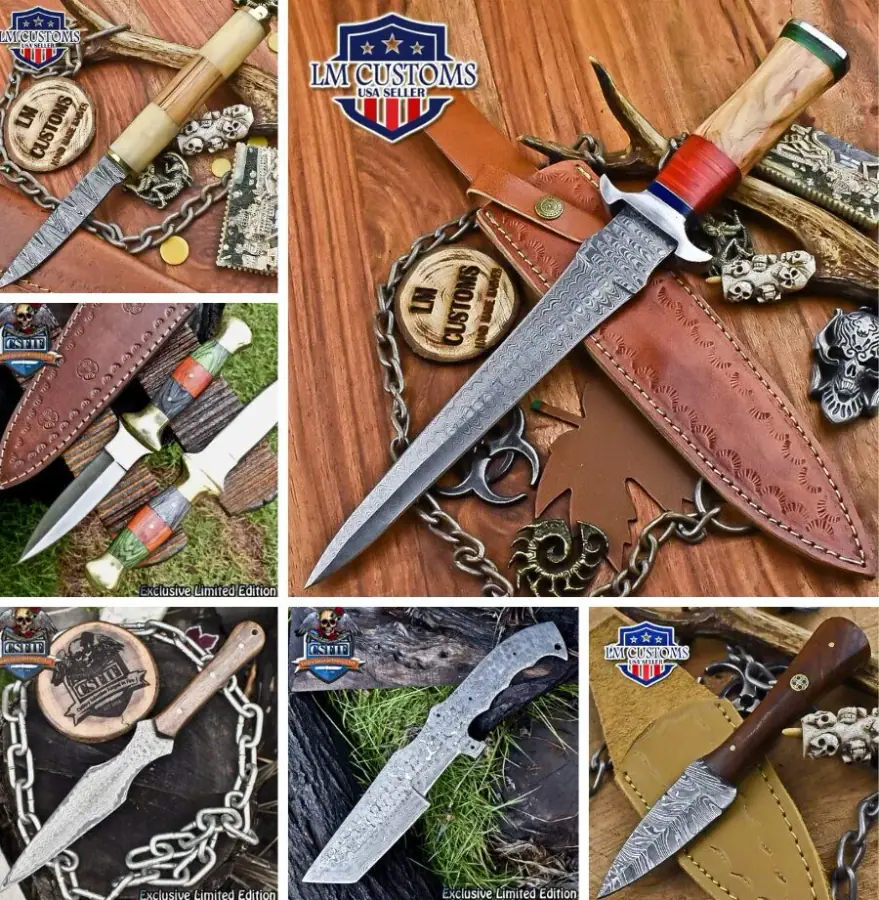 Made to Order
 Made-to-Order Lot
Chef Knives — 10-Piece Lot
A hand-picked lot of 10 chef knife pieces, hand-forged to order in East Northport, NY. Choose your steel below: every lot is one of a kind, always available, no waiting on stock.
10% off all lots for a limited time. Free US shipping. 60-day returns. See our shipping and return policies.
Also available on our eBay store (Top Rated, 110K+ sold), Amazon & Etsy storefronts, in our daily live Whatnot auctions (4.8★, 11,200+ reviews), at gun & knife shows, and for wholesale volume. Carry rules vary: see knife laws by state.
Care & Maintenance
Full care guide →- 1
Hand wash only
Never put handmade chef knives in a dishwasher. The heat, moisture cycling, and detergent degrade handle materials and cause blade oxidation. Hand wash with mild soap and warm water immediately after use.
- 2
Dry immediately
Dry the blade and handle completely with a soft cloth immediately after washing. Leaving water on the blade — especially on Damascus and high-carbon steel — causes spots and rust.
- 3
Use a wooden or plastic cutting board
Avoid glass, ceramic, and marble cutting surfaces. Hard surfaces damage the edge bevel. End-grain wood boards are gentlest on knife edges.
- 4
Hone before each session
Run the blade 4–5 strokes per side on a honing steel before each cutting session to realign the edge. This extends time between sharpenings significantly.
- 5
Sharpen on a whetstone annually
Home cooks should fully sharpen chef knives on a whetstone (1000 then 3000 grit) once or twice per year. Frequent honing reduces how often full sharpening is needed.
Chef Knives — Frequently Asked Questions
What length chef knife is best?
Is Damascus steel good for kitchen knives?
What is a full-tang knife?
How do I know when my chef knife needs sharpening?
Can I use a honing steel on a Damascus chef knife?
Related Articles
Inquire About Chef Knives
Tell us your requirements and we'll respond within 24 hours.
Related Knife Types
Not sure what to expect?
See how our process works →Prefer to call?
(631) 812-5595