
Louis Martin Custom Knives
Handmade Hunting Knives
A hunting knife is a fixed-blade or folding knife designed for field dressing, skinning, and butchering game. Louis Martin hunting knives are hand-forged with drop-point or clip-point blades in high-carbon and Damascus steel, purpose-built for American hunters.
Quick Answer
A hunting knife is a fixed-blade or folding knife designed for field dressing, skinning, and butchering game. Louis Martin hunting knives are hand-forged with drop-point or clip-point blades in high-carbon and Damascus steel, purpose-built for American hunters.
A great hunting knife is an extension of the hunter — reliable, sharp, and built for the demands of the field. At Louis Martin Custom Knives, we've been forging hunting blades for three generations, perfecting profiles and steel selections that perform from the stand to the butcher block. Every hunting knife leaves our East Northport workshop ready for immediate hard use.
Characteristics & Construction
Blade Profiles
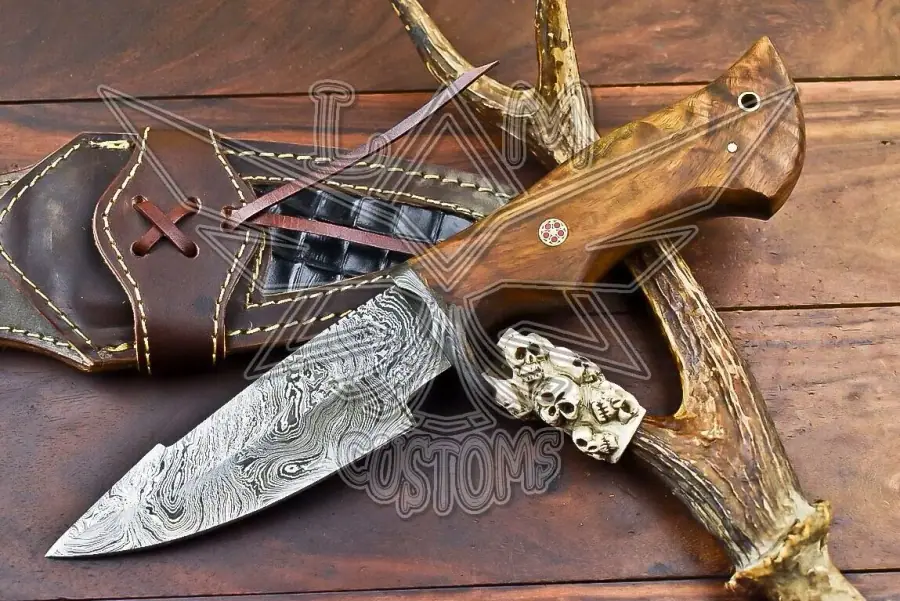
Our hunting knife lineup covers drop-point (versatile, controlled tip for skinning), clip-point (penetrating tip for precision work), and gut-hook profiles (for field dressing without puncturing organs). Each profile is ground to a full flat or convex bevel for optimal field performance.
Steel Selection
We offer hunting blades in 1080 high-carbon Damascus, D2 tool steel (semi-stainless, 60 HRC), and 440C stainless. For hunters who prioritize edge retention over maintenance simplicity, our Damascus blades are unmatched.
Handle Options
Field-use handles demand grip security — our hunting knives are fitted with contoured stag antler, walnut wood, or G10 composite handles with brass or nickel silver guards. All handles are hand-fitted and epoxied for permanent bond.
Sheath Systems
Each hunting knife ships with a hand-stitched leather sheath with a belt loop. Custom sheath options include Kydex retention sheaths for horizontal or scout carry.
 Made to Order
 Made-to-Order Lot
Hunting Knives — 10-Piece Lot
A hand-picked lot of 10 hunting knife pieces, hand-forged to order in East Northport, NY. Choose your steel below: every lot is one of a kind, always available, no waiting on stock.
10% off all lots for a limited time. Free US shipping. 60-day returns. See our shipping and return policies.
Also available on our eBay store (Top Rated, 110K+ sold), Amazon & Etsy storefronts, in our daily live Whatnot auctions (4.8★, 11,200+ reviews), at gun & knife shows, and for wholesale volume. Carry rules vary: see knife laws by state.
Care & Maintenance
Full care guide →- 1
Field clean immediately
Wipe blood and fat from the blade immediately after field dressing. Acidic blood will etch unprotected high-carbon steel within minutes.
- 2
Rinse and dry
At camp, rinse with clean water and dry thoroughly with a cloth or paper towel. Never leave a hunting knife wet overnight.
- 3
Strop before each hunt
Run the blade 5–10 strokes per side on a leather strop loaded with compound before heading out. A sharp blade is a safe blade.
- 4
Oil the blade
Apply a light coat of food-safe mineral oil before storage. For D2 and high-carbon blades, a thin oil coat prevents surface rust during off-season storage.
- 5
Inspect the handle
Check the handle scales and guard annually for cracks, looseness, or moisture damage. Re-epoxy if needed. Antler and wood handles benefit from an annual coat of boiled linseed oil.
Hunting Knives — Frequently Asked Questions
What blade length is best for a hunting knife?
Fixed blade or folding knife for hunting?
What steel is best for hunting knives?
What is a gut-hook hunting knife?
Can I use a Damascus knife for hunting?
How do I field sharpen a hunting knife?
Related Articles
Inquire About Hunting Knives
Tell us your requirements and we'll respond within 24 hours.
Related Knife Types
Not sure what to expect?
See how our process works →Prefer to call?
(631) 812-5595