
Best Self-Defense Knives: What Works and What Is Legal to Carry
Quick Answer
A good self-defense knife is compact, fast to deploy, and legal to carry. This guide covers the best self-defense knife types, key features, and how to choose.
Looking after yourself is fundamental in our daily life. Picture strolling home after dark or hustling through a crowded city – you want to feel safeguarded. A knife may be a sensible self-defense tool. In this article, we’ll dive into the many facets of self-defense knives; discussing their kinds, any laws involved, how to pick the suitable one, instruction, safety measures, and their pros and cons. Custom knives, too, are specially designed implements drawn up to meet distinct requirements and tastes.
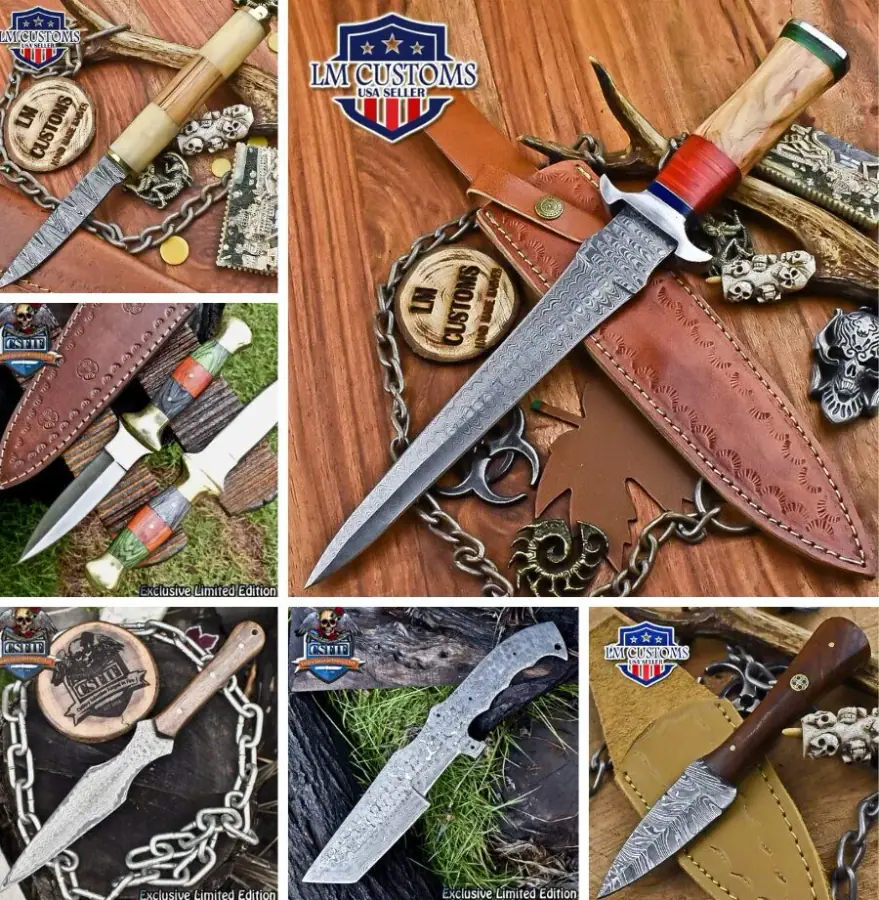
Carry something you trust. Louis Martin hand-forges one-of-a-kind tactical knives and compact boot knives in Damascus and high-carbon steel, finished and shipped from the USA. Browse the collections or call (631) 812-5595.
The Understanding Self-Defense Knives
Knives made for self-defense come handy for safety in risky spots. Their design is neat, making them simple to carry. Their swift use makes them ideal during quick-response situations. Consider them your final go-to gadget for guarding yourself.
Different Types of Self-Defense Knives
There are several types of self-defense knives, each with its unique features and benefits:
- Fixed Blade Knives: These knives have a solid, immovable blade that extends into the handle. They are known for their strength and reliability. However, they can be more challenging to conceal compared to other types.
- Folding Knives: A Folding knife, also known as a pocket knife features a blade that folds into the handle. This design makes them compact and easy to carry discreetly. They are popular for everyday carry (EDC) due to their versatility and convenience.
- Tactical Knives: These are made for battle and strategy scenarios. They usually show bold designs with extra tools and characteristics like jagged rims, window smashers, and comfortable holds.
Legal Considerations
Knowing your local knife laws is crucial, since they change from place to place. All these rules tell you which knives are okay to have, how to have them, and where it’s acceptable to bring them.
Importance of Understanding Local Laws
Knowing your town’s rules on knives is key to staying out of court. “I didn’t know” won’t hold up in court. So, make sure to learn the dos and don’ts about knives where you live.
Common Legal Restrictions
- Blade Length: Many jurisdictions have restrictions on blade length. For example, some areas only allow knife with blades shorter than 3 inches.
- Concealment: Rules sometimes make a distinction between a hidden and visible knife. Some places might have strict rules or even ban carrying knives out of sight.
- Prohibited Knives: Certain types of knives, such as switchblades or butterfly knives, may be banned outright.
How to Stay Informed About Knife Laws
Getting the scoop on knife laws means doing some homework now and then. Trustworthy spots to check? Your local police, law-related websites, or forums for knife fans. You could also sign up with a group for knife rights. They’ll keep you posted on new rules and how they’re standing up for users.
The Choosing the Right Self-Defense Knife
Selecting the right self-defense knife involves considering several factors:
- Blade Material and Durability: Top-notch steel is essential for keeping things strong and sharp. The usual materials you’ll find are stainless steel and high-carbon steel.
- Handle Ergonomics and Grip: A secure, comfortable grip is essential for effective use. Look for textured or contoured handles that fit well in your hand.
- Size and Weight: The knife should be easy to carry and handle. Too large, and it becomes cumbersome; too small, and it may be ineffective.
- Ease of Carry and Concealment: Think about how you’re going to tote the knife around. A foldable or pocket knife is great if you desire to carry it quietly, whereas a neck knife provides fast reach.
- Blade Shape and Edge Type: Different blade shapes (e.g., drop point, tanto) and edge types (e.g., plain, serrated) offer varying advantages depending on your needs.
Popular Brands and Models
Several brands are renowned for producing high-quality self-defense knives:
- Benchmade: Known for precision engineering and durable materials, Benchmade offers a range of folding knives and fixed blades.
- LouismartinCustomKnives: You will come to find the best and good-looking Custom self-defense knives and functional knives at affordable prices.
- Cold Steel: This brand is recognized for its robust and tactical designs, ideal for self-defense.
The Training and Techniques
Importance of Proper Training
Having a self-defense knife is good, but using it right is vital. The right training can change things if you need to protect yourself.
Resources for Training
- Self-Defense Classes: Many martial arts schools and self-defense programs offer knife training.
- Online Tutorials and Courses: There are numerous online resources, including videos and interactive courses.
What Are the Pros and Cons of Self-Defense Knives?
Advantages of Carrying a Self-Defense Knife
- Portability and Concealability: Knives are easy to carry and conceal, especially folding knives and pocket knives
- Versatility in Self-Defense Situations: Knives can be used in various defensive scenarios, providing flexibility.
- Psychological Deterrence: The presence of a knife can deter potential attackers.
Potential Drawbacks
- Legal Risks: Carrying a knife can lead to legal issues if local laws are not followed.
- Requirement for Training: Effective use requires proper training, which can be time-consuming and costly.
- Limited Range Compared to Other Self-Defense Tools: Knives require proximity to the attacker, which can be risky.
What Are the Key Takeaways?
Self-defense Knives for self-defense are helpful in keeping yourself safe. Knowing about various knife types, laws, and the right way to use them is vital. The right knife selection, awareness about rules in your area, and safe use and care can boost your safety. Always bear in mind, that readiness and assurance are key, having trust in your self-defense tool’s reliability.
Frequently Asked Questions
What is the best knife for self defense? +
The best self defense knife is one you can reach and open under stress: a small fixed blade with a secure sheath or a sturdy locking folder you can deploy one-handed. Reliability, grip, and your training matter far more than blade size.
Are self defense knives legal to carry? +
Carry laws vary widely by state and city, covering blade length, fixed versus folding, concealed versus open, and automatic mechanisms. Read your state statute before carrying any knife for defense. This is general information, not legal advice.
Is a fixed blade or folding knife better for self defense? +
A fixed blade is faster to deploy and cannot fail at the pivot, which is why trainers prefer them where legal. A folder is easier to carry legally and discreetly. Choose the strongest option your local law allows and practice drawing it.
Shop the Collection
Browse our handmade Folding Knives